By Maddison Sourris
YouTubers have become a new breed of celebrity. If you are somehow still unfamiliar as to what a YouTuber is, they are Internet celebrities who create content by uploading self-made, interesting videos for their audience, subscribers and the whole public to see. They choose a niche for their channel and in time, release relevant content that gains them loyal subscriberswho are interested in their videos. There are numerous Australian YouTubers; ranging from Lannan Eacott (9.5 million subscribers) who does challenge videos, to Shani Grimmond (1.6 million subscribers) whose niche is beauty and lifestyle (Ranker, 2019).
This case study will discuss how YouTubers have responded to challenges and opportunities of digital disruption through the use of convergence, affordances and participatory culture.
Social media has not exactly facilitated change in the nature of YouTubers, but more so created/made-up the profession. A prime example of how the profession has been made up is through convergence.
Social media has not exactly facilitated change in the nature of YouTubers, but more so created/made-up the profession. A prime example of how the profession has been made up is through convergence.
Convergence is the combination/uniting of computing (information technologies and digital media), communication (networks and practices), content (media and information) – AKA the 3 C’s – and the wider changes that this facilitates (Flew, 2014). For YouTubers, this relates to user/audience behaviour and communication practices (Week 3 Lectorial). For YouTubers to exist, different elements converged together such as YouTube and social media alongside the audiences’ willingness to use them as one.
Nowadays, new media entertainment has to provide multi-textual engagement opportunities. That is why YouTube can be watched on computers, smartphones, smart T.V.’s, in an Internet browser or app. This supports how the convergence of technology and the networks created through social media use, consequence the ability to distribute and access social resources among subscribers, audiences and the public, no matter how loosely connected (Papacharissi, 2011).
With the convergence of social media, audiences, platforms and technology, YouTube was created, which in turn created the profession of a YouTuber. This job did not exist 10 years ago– alongside a multitude of other social media based professions – however due to the make-up above, convergence has created many jobs.
Social media has facilitated change in the nature of YouTubers in a positive way. Now with the multiple devices to view YouTubers videos on, it consequently brings in more viewers and subscribers. According to YouTube Creators Academy, for YouTubers to be eligible to make money, they must be in good standing with YouTube, have at least 4,000 watch hours in the previous 12 months and have at least 1,000 subscribers (YouTube, 2019).
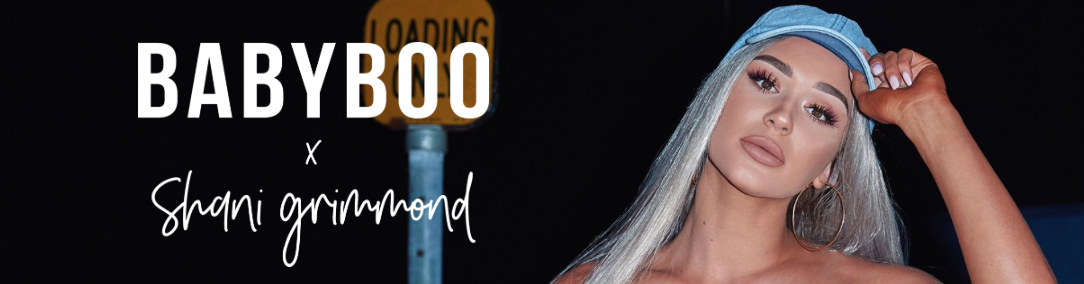
For YouTubers to earn money, they can collaborate with brands for paid partnerships as Brand Ambassadors – for example, Shani Grimmond is a Brand Ambassador for Babyboo Fashion. Viewers see that Shani wears Babyboo therefore if it is good enough for her; it is good enough for them. Shani even has her own collaboration with Babyboo by creating her own line of clothes. With Shani on YouTube and Babyboo Fashion collaborating, this shows how convergence can be applied in many ways. Furthermore they also earn money from the ads that play at the start and duration of their videos.
Social media has facilitated change in the nature of YouTubers, as just about anyone can be a YouTuber. There are no outstanding skills, literacies or qualifications required – just hard work, dedication and a relevant niche. Successful YouTubers also connect with their subscribers/audience on Instagram, Twitter, Snapchat and Facebook to maintain exposure and connectivity. Essentially, convergence is technological, cultural and social changes resulting from different media devices, contents, producers and consumers uniting (Week 2 Lectorial).
As the internet becomes progressively global and with social media and mobile devices transforming what we currently know as the World Wide Web, new affordances and challenges are starting to emerge (Flew, 2014). Affordances are an apparent range of conceivable actions linked to features of a platform (Butcher and Helmond, 2018). They can be features that have suggested uses and how they shape possibilities for cultures, behaviours understandings of platforms and interactions (Butcher and Helmond, 2018).
Social media is playing a role in shaping the identity of YouTubers through affordances. Affordances are the role of platforms’ functionalities (Week 1 Lectorial). According to Nancy Baym, the Social Shaping of Technology (SST) “is the consequences of technologies arise from a mix of ‘affordances’ – the social capabilities technological qualities enable – and the unexpected and emergent ways that people make use of these affordances,” (Baym, 2010, 44). In relation to the SST perspective, the affordance of platforms and the reality of how they are used and integrated into everyday life is interesting, signifying that new media technologies are neither good nor bad (Week 1 Lectorial).
The nature of the job as a YouTuber consists of relying on your affordances to dictate when and what content to put out. There are four characteristics and technological affordances but only two are relevant. Firstly, persistence: where online content is automatically recorded and archived and secondly, searchability: where content in network publics can be accessed through search (Boyd, 2008; 2011). Persistence characteristic significantly relates to YouTubers as they use combinations of many different keys to unlock the attention and wallets of audiences. These keys are described as the affordances of YouTube. All social media offer peer-to-peer communication, however these differ between YouTube, Instagram and Twitter. Searchability characteristic is useful for YouTubers because their content can be searched up on multiple platforms anywhere, anytime. This means they can also access their own insights and analytics anywhere, anytime.
YouTubers have access to audience analytics, which is important because it gives them a clear sense of who/age/gender/where/interests of their audience (Module 2). To leverage it is time consuming and it involves commitment to use the analytics to inform future content (Module 2). For example, YouTubers can use their affordances to check their analytics and see where the majority of their subscribers are located and post at a reasonable time for their audience, resulting in reaching maximum exposure.

However, these analytics can be seen as a negative for new media audiences, as every mouse click and video is logged (Green and Jenkins, 2011, p. 111). Even if the audience is an inactive lurker, they are ultimately still generating data to improve content delivery techniques or recommendation engines, ultimately increasing the popularity of online media businesses (Green and Jenkins, 2011, p. 111).
YouTubers viewers and subscribers are an empowered new media audience as a (positive) result of digital disruption. Social media has facilitated change in the nature of the relationship between YouTubers and their audience due to participatory culture. Participatory culture is where the audience do not only act as consumers but also contributors or producers. There are low barriers for expression/engagement and there is a strong support for sharing with others (Week 2 Lectorial). The audience believe their contributions matter and YouTubers feel as though they are connecting (Week 2 Lectorial).
Essentially, users can participate in curating, circulating and critiquing content (Week 2 Lectorial). In practice, the audience are participating by curating and circulating content for YouTubers – whether they know it or not – which is shown in analytics. They can easily critique the YouTubers video content by interacting with them and leaving comment, such as what they liked about the video, what other video content they would like to see and some constructive criticism.
To conclude, this case study has discussed how YouTubers have responded to challenges and opportunities of digital disruption through the use of convergence, affordances and participatory culture. These opportunities of digital disruption are positive and have consequently created the job of being a YouTuber, supporting how social media has had a positive significant impact.
References:
Ann, (2016). The Affordances of Social Media Platforms. Retrieved from https://www.annehelmond.nl/2016/08/01/the-affordances-of-social-media-platforms/
Babyboo fashion. (2019). Babyboo x Shani Grimmond. Retrieved from https://www.babyboofashion.com
Baym, Nancy. 2010. “Ch 1: New Forms of Personal Connection.” In Personal Connections in the Digital Age, 1 – 21. Cambridge MA: Polity Press.
Baird, F. (2018). YouTube Analytics: A Simple Guide to Tracking the Right Metrics. Retrieved from https://blog.hootsuite.com/youtube-analytics/
Boyd, d. 2011. “Social Network Sites as Networked Publics – Affordances, Dynamics, and Implications.” In Papacharissi, Z.A Networked Self – Identity, Community, and Culture on Social Network Sites, 39-58. New York: Routledge.
Flew, Terry. 2014. “Ch 1: Introduction to New Media.” In New Media. 4thed, 1 – 17Melbourne: Oxford University Press.
Green, J., and Jenkins, H. 2011. “Spreadable Media. How Audiences Create Value and Meaning in a Networked Economy.” In The Handbook of Media Audiencesedited by Virginia Nightingale, 109-127. Malden, MA: Wiley-Blackwell.
Martin, N. (2018). 7 Digital Marketing Jobs That Did Not Exist 10 Years Ago. Retrieved from
Mediakix Team. (2018). The Top 12 Ways YouTubers Make Money. Retrieved from http://mediakix.com/2018/03/how-do-youtubers-get-paid-make-money/
Module 2. (2019). CYB105 Understanding Audiences Module 2. Retrieved from https://blackboard.qut.edu.au/webapps/scor-scormengine-bb_bb60/delivery?action=launchPackage&course_id=_141645_1&content_id=_7914317_1
Ward, T. (2018). How To Get More YouTube Subscribers. Retrieved from https://www.forbes.com/sites/tomward/2018/05/11/how-to-get- more-subscribers-on-youtube/#6eaa34fc1506
Week 1 Lectorial. (2019). Social Media, Self, Society. Retrieved from https://blackboard.qut.edu.au/bbcswebdav/pid-7846359-dt-content-rid-23342602_1/xid-23342602_1
Week 2 Lectorial. (2019). Social Media + Society. Retrieve from https://blackboard.qut.edu.au/bbcswebdav/pid-7846360-dt-content-rid-23079968_1/xid-23079968_1
Week 3 Lectorial. (2019). New Media and Identity. Retrieved from https://blackboard.qut.edu.au/bbcswebdav/pid-7846361-dt-content-rid-23079970_1/xid-23079970_1
YouTube Creators. (2019). Lesson: Make money on YouTube. Retrieved from https://creatoracademy.youtube.com/page/lesson/revenue-basics#strategies-zippy-link-1

 Maddy's Blog